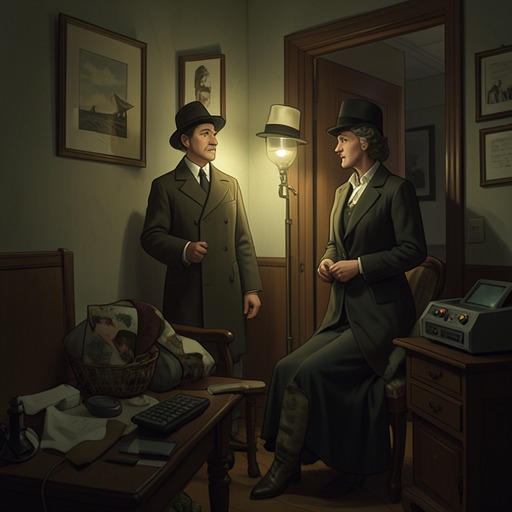
Jack takes the blame for the police failure
Anxious PeopleJack takes responsibility for the failed police response by publicly claiming that he was responsible for the operation and that the bank robber had been lost. His decision comes after Jim privately tells him the truth about helping her escape, and it leaves the shame and scrutiny with Jack rather than his father.
The Crisis Behind the Cover-Up
The bank robber’s predicament was not simply a matter of escaping punishment. She had attempted the robbery to raise 6,500 for rent after her husband’s lawyer threatened to take their daughters if she had nowhere to live. When Jim asks what she needed the money for, she explains the rent and the threat concerning the girls; the immediate motive is economic desperation and fear of losing her children.
She also recognizes the damage her choices have caused. She calls herself an idiot, says she had tried to avoid conflict with her husband and spare the girls from it, and admits that her attempt to manage everything alone has created chaos. She says it is all her fault and offers to release the hostages. Jim understands that even surrender would likely lead to prison, and concludes that the only way to prevent her punishment is not to catch her. His decision creates the police failure for which Jack later takes public responsibility.
Jim Tells Jack the Truth
After the escape, Jim is left alone in the stairwell while the hostages are safely on their way to the station. At the police station, he tells Jack the whole truth. Jack wants to be angry, but instead begins working out a plan. Their exchange makes the personal cost of Jim’s decision explicit: Jim offers to face the consequences himself, while Jack tells him to stay.
Jack does not explain his father’s role to the press. Once the witnesses have been allowed to leave through the back of the police station, he goes out the main entrance, where reporters are waiting, and says that he himself was responsible for the entire police response and that the perpetrator has been lost. He presents the failure as his own, not as a concealed decision made by Jim.
Public Blame and Private Consequences
The reporters respond with accusations of police incompetence; others take notes, ready to turn the incident into articles and blog posts. The narrative makes Jack the sole bearer of the shame, so that nobody else is blamed. Inside, Jim sits with his face in his hands. Jack’s public account protects his father from exposure, but it does not undo the escape or erase the pressure of the public response.
The immediate scrutiny proves short-lived. Detectives from Stockholm arrive early the next morning, on New Year’s Eve, and review the witness statements and evidence while speaking with Jack and Jim. They decide they have no resources for further investigation: nobody was injured, nothing was stolen, and, in their view, there are no victims. They leave in a hurry to return home for the holiday, while the journalists have already moved on to another story. Jack’s choice remains a concentrated act of taking responsibility, even as the official attention surrounding the incident fades.